
In the hyper-competitive global market for marine lipids bioactive ingredients, the transition from crude fish oil to high-purity Omega-3 concentrates is defined by a narrow margin between profitability and technical obsolescence.
Many facilities fail to bridge this gap, falling into a cycle of trial-and-error adjustments that erode yields and lead to inconsistent product quality.
Achieving consistent enrichment levels of up to 74% EPA and DHA while yielding bioactive ingredients of 68% and beyond requires systematic project planning, experienced process practical expertise, and in favor of a rigorous “Basic Engineering Package” (BEP)
For a typical industrial-scale plant, where CAPEX can reach upwards of US$15 to 22 million, the BEP is more than a technical document—it is a critical financial safeguard.
A properly executed engineering package prevents “mistakes in the development of targeted product innovation” that cause many factories to lose their competitive advantage.
By aligning equipment configuration with the fundamental chemistry of the feedstock, plant owners protect their investment and ensure a high-value output.
1. Your Feedstock is Your Fate: The GC Profile Analysis
In the short-path molecular distillation process, you cannot out-engineer a fundamentally unsuitable raw material.
The initial EPA/DHA ratio and the fatty acid profile of your crude oil set the absolute ceiling for achievable concentration.
While the “Peruvian Anchovy 18/12” profile is the global industry baseline, profiles such as 17/8, 19/8 and 20/9 are viable for producing and yielding higher rates of 36/24 EE concentrates.
Conversely, feedstocks like Russian herring fish oil are considered highly impractical for these high-purity targets.
A data-driven Gas Chromatography (GC) report is the ultimate arbiter of success.
Specifically, the number of “intermediate peaks” between the EPA and DHA markers dictates processing difficulty.
- Less than 3% mass of intermediate peaks: Ideal for 36/24 EE production.
- 4–7% mass of intermediate peaks: Represents a threshold for significant processing difficulty and potential yield loss. Ultimately, high levels of content are inextricably linked to both the precision of the process and the inherent quality of the raw material.
2. The Non-Negotiable Necessity of Pre-Treatment
Bypassing rigorous pre-treatment and decontamination steps to save on initial costs is a strategic error.
Processes such as degumming, contaminants removal and bleaching are essential for removing free fatty acids, heavy metals, mineral oil, plasticizers, pharmaceutical residues, etc.
Beyond protecting equipment from fouling and clogging, early-stage removal of pollutants and contaminants is critical; if not addressed, these impurities will be concentrated in later distillation stages, potentially leading to product rejection and loss of market acceptance.
Protecting bioactive integrity also requires strict atmospheric control.
As noted by industry process expert Mr. Zhou regarding the necessity of vacuum-pumping measures: “Before nitrogen blanketing, we normally pull the vacuum first, then fill in nitrogen. It’s a full process control… I pulled off the air and I filled the system with high-purity nitrogen.” So that our product will be guaranteed delivery standard within peroxide value(PV) below 1 meq.
3. Multi-Stage SPD: The Foundation of Economic Co-Production
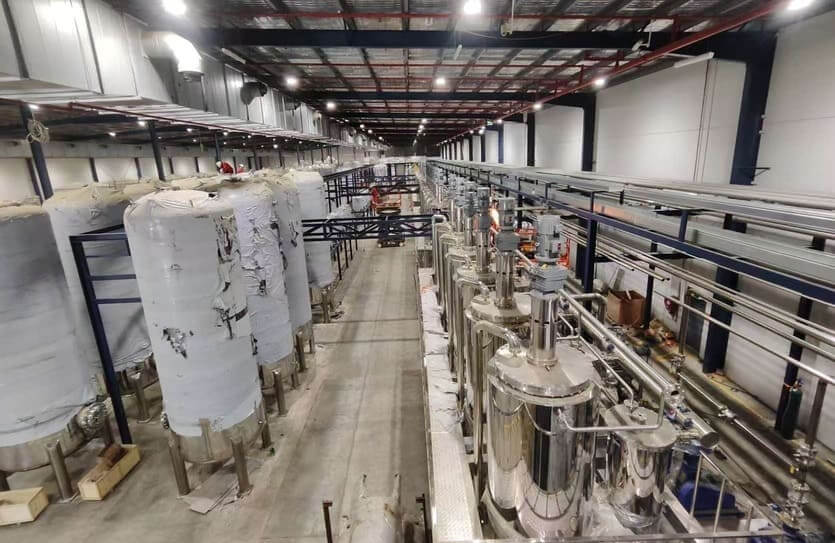
Reaching the 60–75% concentration threshold requires a shift away from inefficient batch processing toward continuous multi-stage short-path molecular distillation (SPD).
Standard industry practice for high-purity targets now involves 8–10 stages of short-path molecular distillation to ensure efficiency and product stability.
Single Stage Column Processing Method requires multiple re-processing passes;
Higher risk of thermal degradation and oxidation.
Continuous Multi-Stage (8–10 Stages) have been optimized and practised in past decades to ensure high efficiency and productability in large scale production plants.
The most economical foundation for the co-production of multiple product fractions (e.g., 50/10, 40/20, 36/24, 25/35, 10/40 and 33/22) simultaneously.
This configuration allows for the fractionation of fatty acids through sequential distillers, operating under precise temperature and vacuum gradients to separate fractions progressively without the need for multiple manual passes.
4. Mass Balance Reality and Yield Optimization
Industrial feasibility depends on an accurate mass balance and Refined Management.
Based on current industrial data, we apply the “maximum recovery of bioactive ingredients rule and minimal loss in processing”
It typically requires practical expertise combining systematic stability and refined management of the process flow.
To reach the 74% EPA+DHA concentration and 68%+ yield target, the ethyl ester content in the specific fraction must be maintained at or above 98.5–99%.
Top-tier plants differentiate themselves through the management of “light fractions.”
While a 4–5% loss in the front-stage distillate is often allowed, optimized configurations control this at approximately 2%.
From a commercially savvy perspective, these light fractions are not waste; they should be repurposed as feedstock for biodiesel, pesticide adjuvants, or textile additives , capturing value from every kilogram of processed oil.
Conclusion: The Path to Industrial Excellence
Industrial excellence in Omega-3 enrichment is the result of end-to-end project management, moving from master planning and layout planning through to start-up commissioning.
While equipment configuration is the skeleton of the plant, refined management and the “practical tacit knowledge” of fatty acid chemistry are the true differentiators between a profitable enterprise and one that loses its competitive edge.
Is your current process limited by the physical configuration of your equipment, or by a fundamental misunderstanding of your feedstock’s chemical potential?
For a deeper analysis of your specific mass balance or a customized process solution for your next expansion, contact our team for expert communication and cooperation.
