


In the competitive landscape of nutritional lipids, process capacity improvement is the engine of project success and robust investment returns.
However, scaling a facility isn’t just about increasing output.
It requires utilizing world-class engineering and sustainable circularity to produce the world’s most bioavailable Omega-3 components, ensuring that the leap to high-volume production never compromises individual consumer health outcomes.
The innovation route required to take a facility from producing hundreds of tons per year to a massive 20 Tons Per Day (TPD) closely mirrors the technological evolution our industry has experienced over the past few decades.
Here is a look at that developmental scale, and how modern engineering makes these production innovations possible.
The Evolutionary Scale of Omega-3 Production
The journey of scaling Omega-3 concentration typically follows a proven historical trajectory, demanding specific technological leaps at each stage:
- Phase 1: The Foundation (Hundreds of Tons/Year) Historically, this was the standard for early-stage or highly specialized producers. Operations at this scale often rely on batch processing or single-stage distillation. While perfect for market entry and proving product viability, the limitations in throughput and energy efficiency quickly become bottlenecks as market demand grows.
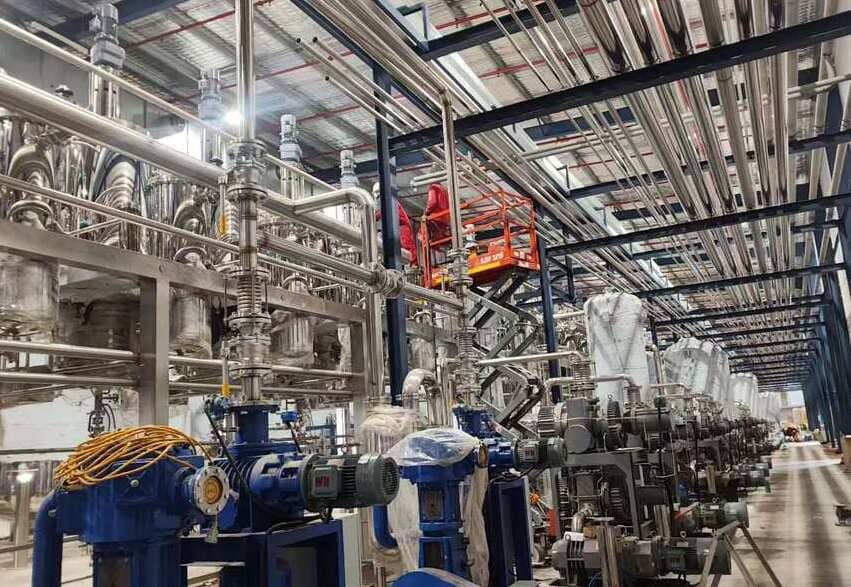
- Phase 2: The Acceleration (5 to 8 Tons/Day) This represents the crucial “scale-up” phase. To jump from yearly tonnages to processing 5-8 tons daily, producers must transition from batch to continuous processing. This era of development saw the widespread adoption of multi-stage Short Path Distillation Units (SPDU). At this stage, equipment units must be combined together, aligned with ancillary equipment, and process working parameters optimized for continuous vacuum operation, allowing for the precise fractionation separation and enrichment of EPA and DHA while protecting the oil from thermal degradation.
- Phase 3: High-Volume Mastery (20 Tons/Day and Beyond) Reaching a 20 TPD capacity is the common middle pinnacle of current industrial scale. This phase requires not just larger equipment, but fundamentally integrated systematic engineering and processing lines planning. It reflects the modern industry’s shift toward highly economies of scale and cost-efficient, automated, continuous, and multi-technological facilities. At this scale, producers are running multiple dedicated lines simultaneously—for example, one line dedicated to high-purity up-concentration, another for re-esterified triglycerides (rTG), and parallel systems managing low-purity feeds and redistillation.
How We Engineer Production Innovations
Transitioning between these phases requires more than just buying bigger distillation columns or tanks; it demands a holistic redesign of the process production lines.
Here is how we partner with facilities to implement these capacity innovations:
1. Strategic Technology Integration Scaling to 20 TPD and beyond while targeting diverse product specifications (from standard 18/12EE/rTG, 30/20EE/rTG, 33/22EE/rTG, 35/25EE/rTG, 36/24EE/rTG, 40/20EE/rTG, 40/30EE/rTG, 50/20EE/rTG, 50/25EE/rTG, 50,40EE/rTG, 10/50EE/rTG, 10/60EE/rTG ratios up to extreme 97+ monomer API components) requires blending process technologies with project programming. We design continuous lines that integrate 8 to10-stage SPDUs equipped with high-performance molecular pumps for standard concentration, and seamlessly integrate advanced steps like the Urea Inclusion process and High Performance Liquid Chromatography SMB system to unlock ultra-high purity ratios that distillation alone cannot achieve.
2. Intelligent Yield & Reflux Optimization At high volumes, even a 1% loss in yield severely impacts profitability. We engineer systems that utilize low-content redistillation (keeping low content to disposal within 1-2%) and precise reflux controls. This allows operators to extract maximum value from intermediate grades, targeting 25%-30% finished product on the first pass while continuously upgrading the remaining oil.
3. Future-Proofed Facility Design Scaling up involves navigating complex layout constraints, floor height limits, and stringent food, drug, or API regulations. We approach a 20 TPD scale-up by designing three-dimensional or horizontal layouts tailored to the exact requirements of the process, ensuring environmental compliance, fire safety, and energy efficiency are baked into the core engineering.
Process production capacity innovation is a journey of continuous refinement.
By applying the hard-won engineering lessons of the past decades to today’s cutting-edge technologies, we can help producers meet global demand profitably and sustainably.
Beyond Scale: Fine-Tuning SPDU Systems for Peak Omega-3 Production
In the process of exploration of scaling Omega-3 production capacity, we detailed the evolutionary process from small batch processing to robust, multi-line continuous facilities capable of 20 tons per day.
However, achieving industrial scale is only half the equation.
To utilize world-class engineering and sustainable circularity to produce the world’s most bioavailable Omega-3 components, a system must be meticulously fine-tuned.
Peak operation ensures that high-volume production never compromises individual consumer health outcomes, while simultaneously maximizing efficiencies for both operators and their partners.
Here is a deep dive into the optimization techniques required to transition an operational Short Path Distillation Unit (SPDU) from simply running, to running at absolute peak performance.
1. The Long Game: Embracing True Continuous Operation
A common hurdle during scale-up is treating a continuous system like a series of large batches.
For example, while running sequential 30,000 kg batches will yield results, it often leaves the system operating far below its optimal working capacity (which is typically 7 to 8 tons per day for standard high-efficiency lines).
The true stability, yield benefits, and energy efficiencies of an SPDU are only fully realized after several months of uninterrupted, continuous operation.
Moving away from batch-type mindsets and committing to sustained, month-over-month runs is the first step toward true optimization.
2. Eliminating Bottlenecks: Flow Rate and Temperature Precision
In multi-stage distillation, observing unusually low volumes at the extreme ends of the system (such as Stage 1 and Stage 8) indicates a thermal or flow imbalance that restricts overall throughput.
Optimizing this requires precise, targeted interventions:
- Strategic Temperature Increases: By increasing the first stage working temperature to 115°C, the system can flash off all easily extractable components immediately. This prevents lighter fractions from carrying over and bottlenecking the critical middle stages.
- Balanced Flow Control: To safely increase the overall feed rate, operators should maintain output flow control between 5% and 17% at each individual stage. This balanced distribution ensures no single stage is starved of material or overwhelmed.
3. Mastering the Vacuum Architecture
Vacuum depth and stability fundamentally dictate overall production capacity in lipid distillation.
When fine-tuning a system to handle higher continuous feed rates, optimizing the vacuum group configuration is just as important as managing temperature:
- Targeted Pumping Power: Upgrading the system by adding an additional Roots vacuum pump to the secondary vacuum group provides the necessary backbone for high-throughput processing.
- Reconfiguring Pump Zones: Instead of a uniform vacuum draw, the architecture should be strategically zoned. The newly reinforced secondary vacuum group should be adjusted to handle the bulk of the middle distillation load (connecting Stages 2 through 7, or 2 through 6).
- Dedicated Deep Vacuum: Crucially, the final stage vacuum group should be realigned to handle Stage 8 (or Stages 7 and 8) entirely on its own. This separate pumping configuration ensures the absolute deepest vacuum is maintained exactly where it is needed most—at the final stage of purification.
The Path Forward: Data-Driven Innovation
Process innovation does not stop once the parameters are set.
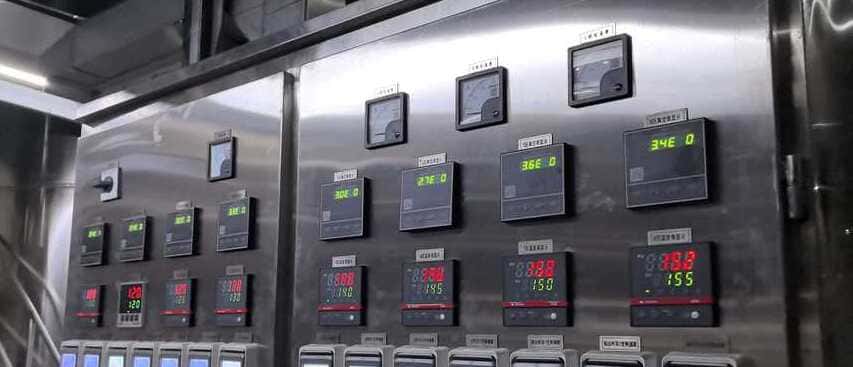
By meticulously tracking and recording process data under these continuous, optimized working conditions, facilities can uncover the next layer of performance enhancements.
This commitment to continuous, transparent improvement is how the industry focuses on building long-term trust and partnerships, assisting stakeholders in making informed equipment decisions, and striving to make everyone comfortable and confident throughout the entire production lifecycle.
