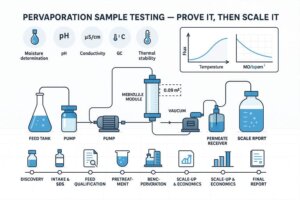
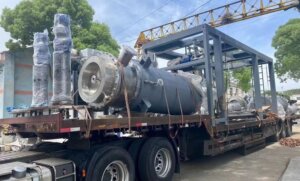
Prove It, Then Scale It: Our Sample Testing Service for Solvent Dehydration
When the stakes are high—tight specs, tight budgets, tight timelines—the smartest move is to test before you invest. Uncertainties around feed quality, fouling risk, and

When the stakes are high—tight specs, tight budgets, tight timelines—the smartest move is to test before you invest. Uncertainties around feed quality, fouling risk, and

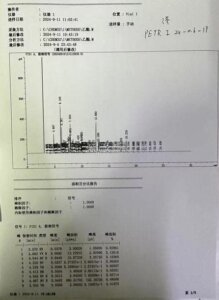
Gas Chromatography (GC) testing analyzes marine fish oil samples to measure critical metrics like EPA/DHA content, contaminants, and fatty acid profiles. This data helps manufacturers refine, concentrate, and purify fish oil more efficiently—saving costs and ensuring quality. Precision: Avoid guesswork in refining with exact EPA/DHA measurements.
Compliance: Meet regulatory standards for purity and labeling claims.
Efficiency: Identify process gaps (e.g., oxidation, yield loss) early.
Discover how a meticulously crafted Process Design Package (PDP) can transform your industrial projects. Learn key components, industry-specific strategies, and actionable steps to ensure efficiency, safety, and compliance.

For decades, fish oil processing was a game of compromises. Outdated gear meant wasted oil, sky-high energy bills, and quality that swung like a pendulum. But here’s the truth: Your machinery isn’t just equipment—it’s your competitive edge. Legacy machines bleed money. But modern tech? It’s a profit multiplier. Innovation isn’t just about profit—it’s responsibility. The future belongs to those who innovate. Machine innovation isn’t optional—it’s the bridge between survival and market leadership.

Producing ultra-pure Omega-3 concentrates with 90% EPA/DHA purity is a formidable challenge, requiring precision at every step—from sourcing high-quality raw materials to mastering complex purification techniques. In this post we dive into the intricacies of this process, exploring obstacles like raw material variability, advanced refining demands, and stringent quality control. At Greatwall Process and Control, we’ve overcome these hurdles with innovative solutions, leveraging proprietary technology, expert partnerships, and cutting-edge methods such as high-efficiency short path molecular distillation and preparative high-pressure liquid chromatography. Our dedication to excellence ensures Omega-3 concentrates that set new benchmarks for purity and potency. Curious to learn more? Join us in pushing the boundaries of Omega-3 innovation—Send a sample or explore tailored solutions today to see the difference for yourself.

The proposed solution is specially designed to efficiently address your specific needs for the dehydration of Isopropyl Alcohol (IPA). Leveraging the latest advancements in zeolite pervaporation membrane technology, this system offers a highly efficient, energy-saving, and low-maintenance approach to solvent dehydration, providing consistent performance and high product purity. The following solution outline the technical philosophy, key features, feed stream quality, design specifications, process flow, utility consumption, system components, quality warranty and commissioning regulations for your review.

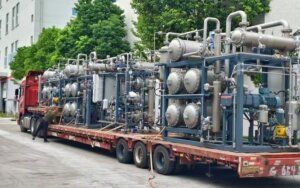
As someone deeply involved in the process and control industry, I often encounter queries about the best practices for extracting and concentrating Omega-3 fatty acids.
This process is crucial, as Omega-3s are essential for human health but notoriously delicate to handle.
The ideal vacuum condition for concentrating Omega-3 fatty acids must strike a balance between low enough to reduce the boiling point and minimize thermal degradation, yet high enough to maintain efficient distillation and separation for target yield. Typically, vacuum levels around 5 to 0.1 Pa are most effective for these purposes.

Short path distillation is a powerful technique used in the purification and concentration of fish oil fatty acids, particularly for increasing the EPA/DHA ratio.
This process allows for precise control over temperature and vacuum conditions, enabling the separation of different components based on their boiling points and molecular weights.
By fine-tuning these parameters, it’s possible to selectively concentrate EPA and DHA while minimizing the loss of other beneficial compounds.

At the stage of fatty acid concentration process, the refined fish oil undergoes short path distillation, a process that operates under high vacuum and minimal heat to prevent oxidation and degradation of the Omega-3 fatty acids.
This technique is highly effective in separating and removing low molecular weight contaminants (e.g., PCBs, dioxins, plastisizers, and heavy metals) while concentrating the EPA and DHA content.
High-performance equipment will allow for fine-tuning these parameters to target the specific boiling points of POPs without degrading the quality of the Omega-3 fatty acids.

The physical deodorization and deacidification process, equipped with advanced process equipment systems, stands at the forefront of this technological revolution.
This blog post explores how these advancements are setting new standards for industrial applications, offering insights for businesses looking to enhance their production capabilities.
The process conditions—temperature, time, pressure, and the ratio of steam to oil—are critically important for achieving the desired standard of oil quality and preserving its nutritional value.
Therefore, the design and process conditions of the deodorization tower can be continuously optimized to ensure that the generation of trans fatty acids is minimized, the removal of volatile pollutants is maximized, and valuable secondary components such as tocopherols and sterols can be controlled.
We will contact you within two working days, please pay attention to the email with the suffix”@greatwallcontrol.com”